A hollow profile is a profile with a flap, without a magnet chamber. Similar to flat profiles, this flap is clamped under a plate or strip, which is then screwed, riveted, or stapled to the inside of the refrigerator door. In other cases, the seal itself is screwed against the inside of the refrigerator door.
Hollow profiles do not contain a magnet. The names of these profiles are therefore indicated with "-A" at the end of the name, as opposed to "-M" for profiles with a magnet.
Read more
Need help finding the right hollow profile?
Not sure which profile you need? Search by brand and model of your refrigeration unit or compare the profile code with your existing door seal. Once you have found the correct profile, you can use the configurator to specify both the color and dimensions to calculate the price immediately.


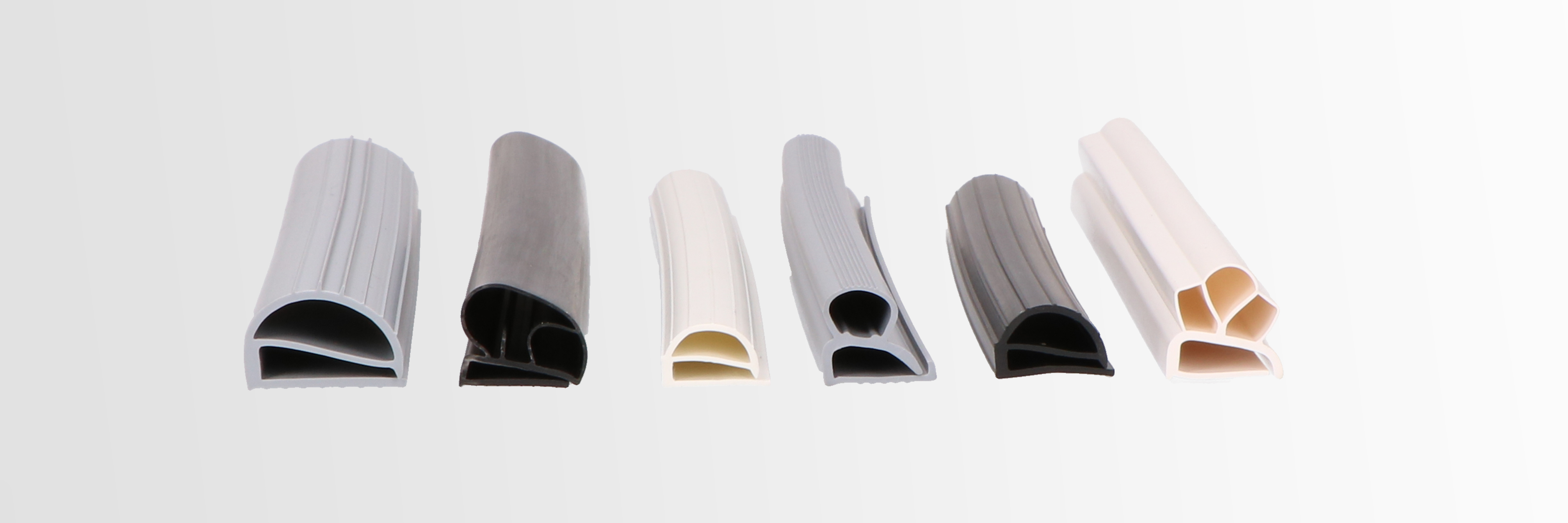
How does a hollow profile work?
The profile is screwed, riveted, or stapled to the inside of the refrigerator door via a plate or strip, or the seal itself is screwed directly against the inside of the door. Because a hollow profile does not have a magnet chamber, no magnet variant is available. All hollow profiles end with -A. Similar to flat profiles, you need tools for installation, such as a screwdriver, rivet gun, or stapler.
If the door seal to be replaced is fastened with rivets, these must first be drilled out. Our advice is to then secure it with screws so that it is easier to replace. Use screws with a flat head. A flat profile is replaced in a similar way to a hollow profile. This video guides you through that process.
When replacing, always check the old profile code or the exact dimensions, so that the new profile has the same fit and closure. If necessary, use the page dimensions of door seals.
Where is a hollow profile used?
Hollow profiles are used in refrigerators, freezers, cold rooms, and drawers. These are usually older refrigeration units for which it is often no longer possible to obtain an original door seal from the manufacturer. Most newer refrigerators are equipped with a push-in profile which is easier to replace.
Find the right hollow profile
DSU supplies hollow profiles in a wide range of sizes and designs. You can choose from three materials: Standard PVC (-A), Soft PVC (-AS), and Extended Life TPE (-AE). In addition, counter-welded profiles are available, where the profile is mirror-welded. You can filter by material and design or search by brand and model of your equipment.
If the correct profile is not listed, also check the category rubber profiles and silicone profiles. This is because there are profiles included that resemble hollow profiles. Since these are made from materials other than PVC, they are categorized separately.
How to compare the right profile
The most important factors when choosing the right hollow profile or a suitable alternative are the working height and width. The working height is the part that is not under the plate/mounting strip. If the working height deviates too much, the door will not close properly. There will be a gap, or the door will not close. In the drawings on the website and in the catalog, the left side is always the outside of the profile once it is incorporated into the door seal.
Frequently asked questions about hollow profiles
Look at the base of the door seal. Is there a flap that is clamped under a plate or strip and screwed, riveted, or stapled? Does the profile not have a magnet chamber? Then you likely have a hollow profile. If it does have a magnet chamber, then it is a flat profile or bead profile.
Then look for a suitable alternative profile with the same working height and an arrow in the same place as the original. View the explanation here. Are you unsure? Feel free to contact us, and we will find the right solution together.
That depends on the exact dimensions and mounting method of the door, not just the brand. Therefore, preferably search by brand and model or measure the existing profile.
For hollow profiles, there is only one way. You measure the outer dimensions of the door seal.
At DSU, we have over 900 brands; unfortunately, there are a multitude of type numbers, and new models are constantly entering the market. When the type numbers are known, they are listed on the brand's page. If the type number is not known to us, that is not a problem. We produce everything to measure. Determine the correct hollow profile and size and use the configuration tool to place the order. Optionally, add the brand and type number to the reference so that we can further complete our information.