A door gasket (also called a magnetic seal) is the rubber or plastic seal around the door of a refrigerator, freezer, or cold room. It ensures that the cooled compartment is hermetically sealed. Most door gaskets have a built-in magnetic strip that pulls the door against the frame and at the same time ensures that the door remains easy to open.
Replacing a door gasket? Follow our step-by-step plan or watch the instruction video.
Go directly to:
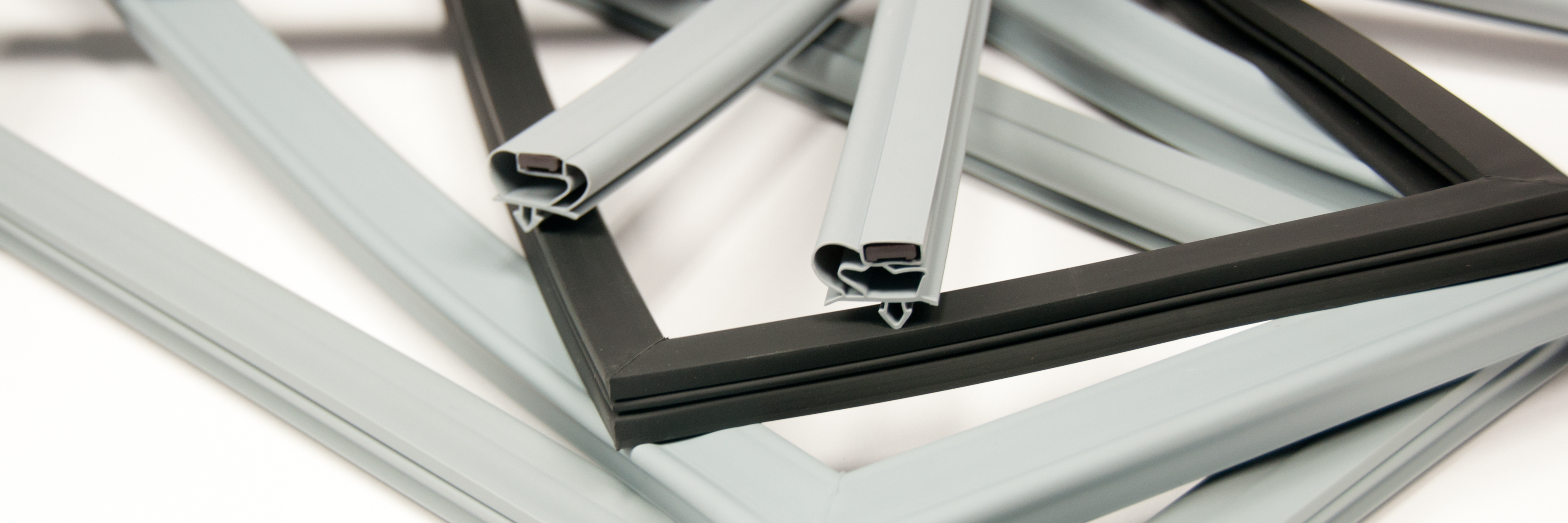
Types of door gaskets
- Push-in profile: door gasket with a push-in arrow that clicks into the rebate of the door. The most common type for refrigerators and freezers.
- Flat profile: door gasket with a flap that is screwed, riveted, or stapled under a plate or strip.
- Bead profile: similar to a flat profile, with a bead at the end of the flap so that the profile does not shift during installation.
- Hollow profile: door gasket with a flap without a magnetic chamber.
- Rubber profile: door gasket made of rubber or EPDM, for cold rooms, freezer rooms, and walk-in coolers.
- Silicone profile: for ovens, steamers, and ultra-low freezers.
- Sweep seals: seal that sweeps along the floor to further seal the cooling unit. Especially used in cold or freezer rooms.
- Foam rubber and sponge rubber profiles: soft, spongy sealing profiles.
- Glass door and sliding lid profile: For smooth guiding, good gap sealing, and controlled damping of sliding lids and glass doors in freezer chests and refrigeration units.
Replacing a door gasket? Keep this in mind
Are you unsure whether your door gasket needs replacing? Look out for these signs:
- The profile has hardened or shows cracks
- The door no longer closes properly or a gap remains visible
- The magnet no longer attracts properly against the frame
A worn door gasket allows cold air to escape from the bottom of the door. This costs energy and can pose a risk to food safety, as the temperature in the cooling unit remains less stable. Also, the refrigeration motor runs more frequently, leading to more wear and tear and heat in the room.
Before ordering a new profile:
- Determine the profile type
- Note the profile code of the current door gasket, so you maintain the same version and fit
- Measure the existing dimensions via dimensions of door gaskets
The right door gasket starts with the right profile
Each profile type has its own mounting method and application. Push-in profiles are pressed into the door rebate and can be replaced without tools. Flat, bead, and hollow profiles are screwed, riveted, or stapled. Rubber and silicone profiles are made of a different material and are used in cold rooms, freezer rooms, or for ovens and steamers.
Are you unsure which profile you need or is the original profile no longer available? See how to find an alternative profile.
Search by brand
It is possible to search by brand of the refrigeration unit. View the overview of more than 900 brands. If the brand or type number is not listed, that's not a problem. We produce every door gasket to measure. Measure the existing profile, compare the profile code, and use the configurator to set the correct size and color yourself.
Order in a few steps
- Determine the profile: search by brand and type, or by type, shape, and material
- Find an alternative via search for an alternative profile if the original is no longer available
- Measure the correct dimensions, see the explanation of dimensions or watch the instruction video
- Configure material, color, and dimensions in the online configurator to see the price directly
- Place your order
We ship your order quickly. It will be shipped with the delivery service within 2 to 5 days. New to DSU? With your first order as a refrigeration company, you will receive a free sample case with commonly used profiles.
A door gasket is the complete seal around the door. The magnetic strip is the component within it that ensures the door is pulled against the frame. Not every door gasket has a magnet; that depends on the profile type.
That depends on the intensity of use and maintenance. As soon as the profile hardens, tears, or the door no longer closes properly, replacement is recommended. A leaking door gasket causes fluctuating temperatures. This is a risk to food safety and can lead to comments during an NVWA inspection. Additionally, it costs unnecessary energy.
For a push-in profile, yes: you press that into the rebate without tools. Flat, bead, and hollow profiles are replaced with a screwdriver, rivet gun, or staple gun. View our step-by-step plan or the instruction video for instructions.
No, you can order from 1 piece, 1 meter, or 1 strip of fixed length.
You can determine the profile in two ways. Search by brand and model of your refrigeration unit, or determine the profile yourself based on its type, shape, and material. Can't you figure it out? Contact us, and we'll be happy to help you.