An oven seal provides the sealing between the oven door and the oven where products are prepared. The name "oven seal" is actually confusing: these seals are made of silicone, not rubber. Silicone is used here because the material is highly resistant to high temperatures during use. DSU specializes in seals for refrigeration and freezer equipment. Because many customers like to order their oven seals together with their other door seals, we also have a selection of silicone profiles in our range.
Go directly to...
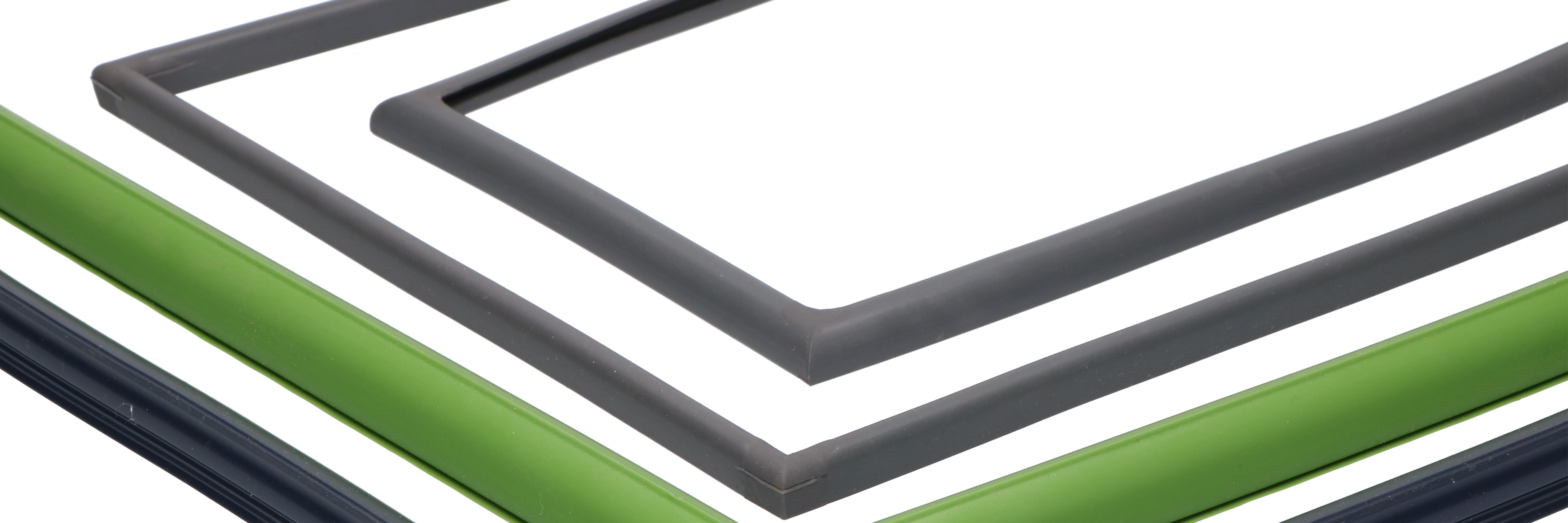
Types of oven seals
For ovens, silicone is almost exclusively used, as this material is resistant to both high and low temperatures. PVC and rubber cannot offer that. Silicone profiles are therefore the standard choice for ovens and steamers. View the range of silicone profiles.
Replacing an oven seal? Keep this in mind
In an oven, the seal is exposed to a different load than in refrigeration equipment: instead of cold, the profile must repeatedly withstand heat. When checking, pay attention to:
- Has the silicone material become hardened, discolored, or porous due to repeated heat exposure?
- Do you see deformation or sagging of the profile around the door?
- Does the oven door still close completely, without a visible gap?
A worn oven seal allows heat to escape during preparation, which can affect baking time and the uniformity of the result. In addition, this costs extra energy.
The right profile starts with the right choice
Choose a silicone profile because of its temperature resistance; PVC or rubber are not suitable for this. Follow our step-by-step plan for measuring and determining the required profile. When replacing, always check the old profile code, so that the new profile has the same fit and closure. Silicone cannot be welded. Therefore, repair or extend the profile with silicone adhesive for professional applications.
Search by brand
Do you know the brand and model of your oven? View the overview of more than 900 brands and quickly find the matching seal. Is your brand or type number not listed, or is the original profile no longer available? Then check out how to find an alternative profile.
Order in a few steps
- Determine the profile or search by brand and model
- Measure the correct size using the step-by-step plan
- Choose to order per meter or on a roll
- Place your order
You will usually receive your order within 2 to 5 business days. Are you working with DSU as a refrigeration company for the first time? Then you will receive a sample case with your first order, handy for recognizing profiles on site.
Slight discoloration due to heat is normal and not in itself a reason for replacement. Pay particular attention to hardening or cracking, as these are the true signs that the profile is worn.
Yes, with silicone adhesive for professional applications you can glue corners. Ensure the surface is clean and grease-free for a durable bond.
Silicone profiles can be ordered starting from a limited number of meters. The exact minimum quantity per profile can be seen in the configurator.
Yes, silicone profiles are also used in steamers, due to the same temperature resistance and resistance to moisture.