Magnet strips ensure the correct closure of refrigerator and freezer doors. They are usually integrated into a door gasket and ensure that the door is tightly drawn against the cabinet. For this, the cabinet edge usually contains an opposing pole: sometimes a magnet strip of reversed polarity, sometimes a piece of iron that the magnet in the door gasket is attracted to. If the cabinet edge is made of stainless steel, then that opposing pole is often integrated behind the stainless steel, because stainless steel itself is not magnetic. The same applies to a plastic strip: behind it, there is then iron or a magnet.
Fixing strips are used to mount door gaskets without a fixed mounting method in the correct position. This happens, for example, with press-in profiles, where the gasket is secured in the door by means of a groove or strip.
A well-functioning magnet and correct fastening are important for the operation of a refrigerator or freezer door. A worn magnet or damaged fixing strip can lead to a door that does not close properly, loss of cold, and extra strain on the refrigeration system. In practice, a magnet rarely needs to be replaced. Is there a magnet in your door gasket? Then you don't need to order it separately, as it is already integrated by default.
Read more
Need help finding the right magnet or fixing strip?
When choosing the right magnet strip or fixing strip, you compare a few simple characteristics: the thickness and width of the strip, and for a magnet strip, also the polarity. Make sure these match the existing strip or the opposing pole in the cabinet edge, so that the magnets attract each other instead of repelling.


Magnet Strips
Magnet strips can be ordered per meter or on a roll of 250 meters. You specify the desired dimensions yourself (short side and long side in cm) and choose a color. Not every magnet strip is available in the same color: M15, for example, is only available in brown.
How does a magnet strip work in a door gasket?
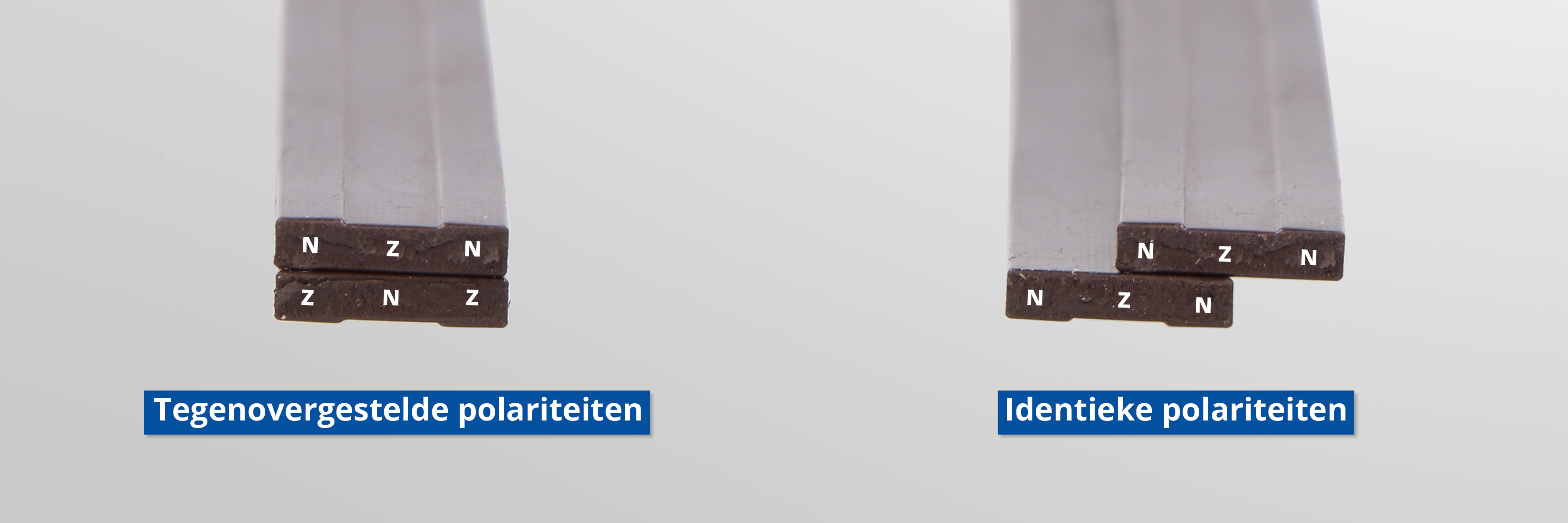
A magnet strip in a door gasket is a permanent magnet with a fixed magnetic direction. This creates a north and south pole. Opposite poles attract each other and like poles repel each other. Therefore, the polarity of a magnet strip must always match the application for which it is intended.
A magnet strip can lose its magnetic force due to, for example, strong heating, damage, or prolonged influence from other magnets. Under normal circumstances, however, a magnet remains usable for many years.
Different types of magnet strips
DSU supplies different magnetic versions in door gaskets. The most common types are:
- M-magnet
An M-magnet has a South-North-South (SNS) polarity. This is the most commonly used version. - C-magnet
A C-magnet has a North-South-North (NSN) polarity and is also called a counter-magnet. An M-magnet and C-magnet attract each other. - B-magnet
A B-magnet is a bi-pole version (2-pole). This is used less often. With this type, it is important to check which side should be placed inwards and which side outwards.
When two identical magnetic versions are placed opposite each other, they can repel each other or shift relative to each other.
Fixing Strips
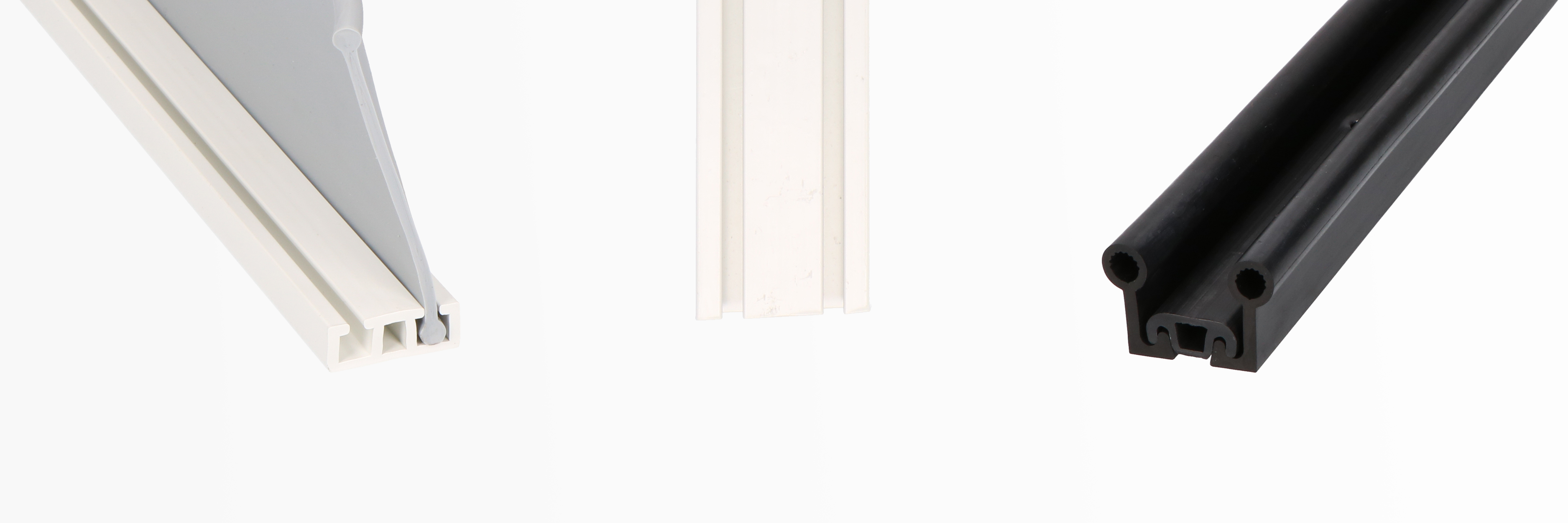
Fixing strips are used to correctly mount PVC, rubber, and silicone profiles. There are different versions:
- Fixing strips with a groove for securing press-in profiles
- Fixing strips for mounting rubber profiles in cold room doors
The correct fixing strip depends on the type of profile and the existing mounting method. On the product page of the respective profile, you will find which fixing strip belongs to it.
An example is fixing strip 20-C. This strip is used with specific press-in profiles and, among other applications, in Fermod refrigeration units. Always check the profile code and dimensions before replacing a fixing strip.
Frequently asked questions about magnets and fixing strips
An M-magnet has a South-North-South polarity and is the most commonly used. A C-magnet has a North-South-North polarity and acts as a counter-magnet. A B-magnet is a bi-pole version and is used less often.
In many cases, a separate fixing strip can be replaced. However, check whether the new strip is suitable for the existing profile and the way it is mounted in the door.
At DSU, we have more than 900 brands; unfortunately, there are a multitude of type numbers, and new models are constantly entering the market. If the type numbers are known, they are listed on the brand page. If the type number is not known to us, that is not a problem. We produce everything to measure. Determine the correct profile and size and use the configurator tool to place the order. Optionally, include the brand and type number in the reference so that we can complete our information further.